

FIFA 2026 tourism financial checklist: if you run a tourism or hospitality business in Vancouver, this is the phrase you want taped to your monitor long before the first kickoff. Big events do not just bring more customers. They bring more moving parts, more exceptions, more refunds, more overtime, and a higher chance that your books get messy right when you need clean numbers the most.
Vancouver is set to host seven matches at BC Place, which is a strong signal that demand will spike across multiple dates, not just a single weekend. That’s great for revenue, but it can be surprisingly hard on cash flow if deposits, payouts, and payroll timing are not planned. According to FIFA, Vancouver will host seven matches at BC Place.
Why FIFA 2026 is different and why finance needs a plan
A normal summer peak is busy but familiar. FIFA 2026 will be busy and unfamiliar, even for experienced operators.
Here’s what makes it different in the books:
Higher volume across short windows. You will likely see extreme daily swings. That stresses staffing, inventory, and customer service, and it also stresses your financial controls.
More prepaid activity. Tours, group bookings, room blocks, private events, and “pay now to secure it” packages usually increase in big-event periods. Prepaid money is helpful, but only if you track it properly and do not accidentally treat deposits as fully earned revenue too early.
More exceptions. Refunds, date changes, partial cancellations, and chargebacks tend to rise when visitors are travelling, plans change, or weather hits.
This is why I like to start with a simple goal for decision makers: protect margin, avoid a cash crunch, and keep compliance clean. The FIFA 2026 tourism financial checklist below is built to do exactly that.
Demand spike planning: staffing, inventory, and vendor terms
The most common mistake I see is planning “busy” without planning “capacity.” If you only forecast sales, you miss the operational constraints that actually drive costs.
You want a peak-week model. Nothing fancy. One page is enough.
Start with three numbers you can estimate without pain:
Daily transaction volume, average transaction value, and hours of operation. Then layer in labour hours by role and your top inventory items that could bottleneck.
If you want a deeper forecasting framework, link your peak-week assumptions into a rolling forecast. It helps you see the cash impact of buying inventory early and paying extra payroll before you collect the related revenue. A good reference point is a 12-week view like the one in 12-week cash flow forecasting.
Vendor terms matter more than most owners expect during a surge.
If your suppliers get slammed too, you can end up paying more, paying faster, or both. In practical terms, that means you should negotiate early on:
Temporary credit limit increases, delivery windows you can count on, and at least one backup supplier for your “top ten” inputs.
If you run a restaurant, bar, or attraction with retail inventory, simplify your peak offering. Fewer SKUs usually means fewer stockouts, less waste, and faster service. It also makes your inventory counts and COGS more reliable, which keeps your margins easier to track during the chaos.
FIFA 2026 tourism financial checklist lens for margin protection
When you look at staffing and inventory through the FIFA 2026 tourism financial checklist, the question becomes: “What decisions protect margin without slowing down service?”
A few examples that usually work in real life:
Tighter menus, time-blocked bookings for high-demand windows, and pricing that reflects peak labour pressure. You do not need to gouge. You just need pricing that does not quietly lose money after overtime and merchant fees.
Deposits, refunds, and cash flow strategy: the hidden drain
I have seen profitable peak seasons still create payroll stress. The reason is almost always timing.
Card sales settle in batches. Refunds come out fast. Supplier bills come due whether or not the weekend went well. Deposits sit on the balance sheet until you deliver.
So this part of the FIFA 2026 tourism financial checklist is about controlling the timing, not just the totals.
First, write down your deposit policy in plain language. If you do tours, private events, or group reservations, decide your deposit percentage and your cancellation windows. Then make sure your team follows it consistently.
Second, set a refund workflow that your staff can execute quickly, even when the line is out the door.
At minimum, you want:
A reason code for refunds, a manager approval threshold, and a simple way to attach documentation for chargebacks. Documentation can be as basic as a booking confirmation, the posted policy, and proof of service.
Third, stop guessing about cash and start using a weekly cash calendar.
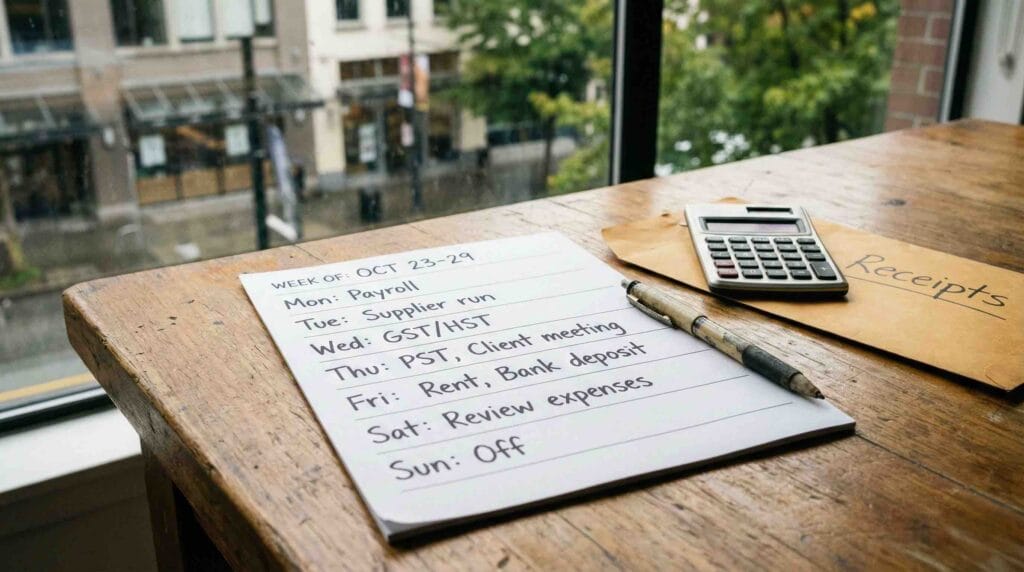
Put these dates on one page for the FIFA window: payroll runs, rent, supplier payment runs, and GST/PST remittance dates. A six to eight week rolling view is usually enough to prevent the “we were busy but broke” moment. For cash flow fundamentals, BDC’s cash flow planning guide is a solid refresher.
Payroll readiness: seasonal hiring and overtime controls
Payroll will be your biggest controllable cost lever during FIFA 2026. It’s also the easiest place for profit to leak if scheduling and approvals are loose.
Seasonal hiring is not only about finding people. It is about onboarding fast enough that you are not paying premium wages for avoidable mistakes.
If you are planning to hire:
Standardize your onboarding steps, confirm who approves overtime, and make sure your payroll administrator knows exactly how tips, commissions, or premiums are tracked.
BC overtime rules catch operators off guard every year. In BC, overtime generally kicks in after 8 hours in a day or 40 hours in a week, with time-and-a-half and double-time rules depending on hours worked. The Province’s hours of work and overtime page is a good reference when you’re building peak-week schedules. That means “just one long shift” can create overtime even if the weekly schedule looked reasonable.
If your team receives tips, build a clean workflow now so you are not patching it mid-event. If you want a detailed BC-specific guide, see Tips & gratuities in BC payroll.
FIFA 2026 tourism financial checklist for avoiding accidental overtime
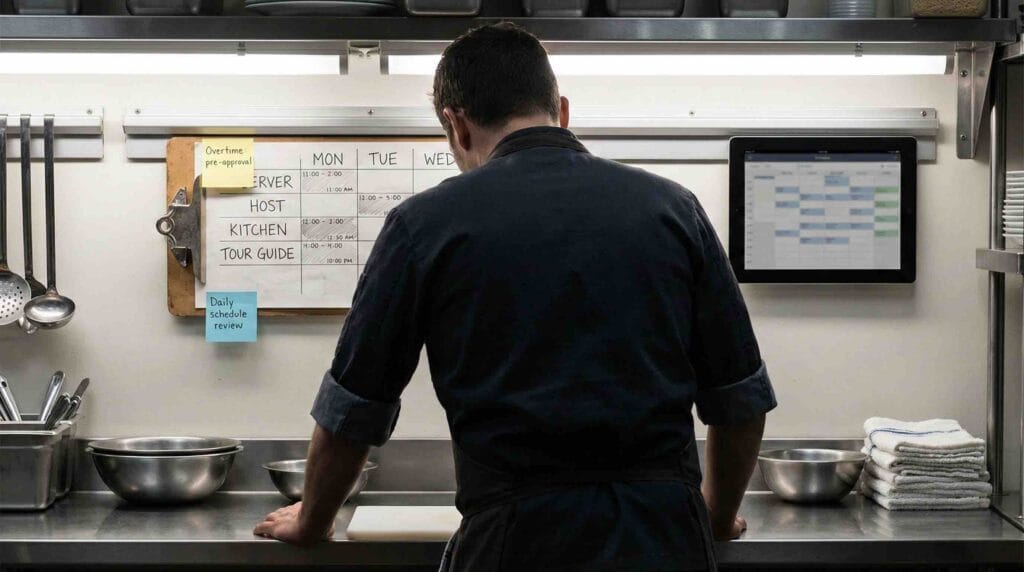
Use the FIFA 2026 tourism financial checklist to set one simple control: daily schedule review during peak weeks. Not weekly. Daily.
A daily review catches the “we stayed late again” pattern before it becomes a double-time problem. Pair it with a pre-approval rule for overtime, and you will usually see immediate improvement in labour percentage.
Tax touchpoints: GST/PST readiness for tourism
High volume is when tax coding errors multiply. One incorrect tax setting in a POS can repeat hundreds of times in a week.
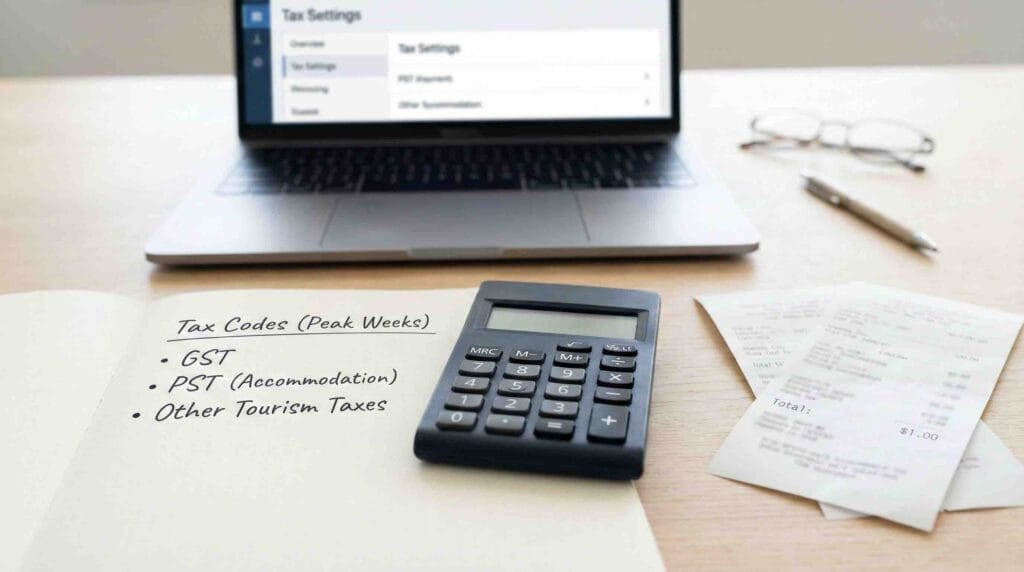
For most tourism and hospitality operators, the two big areas are GST/HST and BC PST on accommodation.
GST/HST generally applies to many tourism supplies, including hotel-type accommodation and many related services, depending on the specifics. CRA’s travel and convention industry guidance is a helpful reference: GST/HST information for the travel and convention industry.
For BC PST, short-term accommodation is a key area. BC’s guidance explains how PST applies to accommodation, and it also discusses when additional taxes may apply. Start here: BC PST on accommodation.
Practical advice from the bookkeeping side:
Do not wait until filing time to “see what happens.” Reconcile your sales tax payable monthly, even if you file less often. During a surge, a single month of miscoding can become a painful cleanup.
This is a core section of any FIFA 2026 tourism financial checklist because tax surprises often show up after the busy period, when you thought you could finally breathe.
POS payouts, merchant fees, and clearing accounts: the part owners forget
In tourism and hospitality, “sales” is not the same as “money in the bank.”
You will have:
Processor batching delays, tips flowing through differently than you expect, refunds netting against payouts, and merchant fees that shrink deposits.
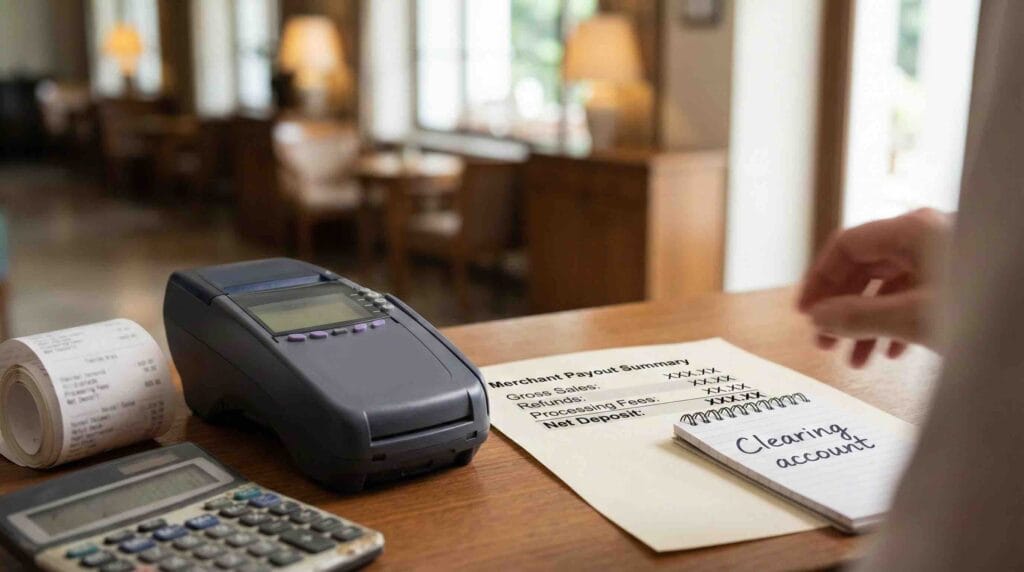
If you do not already use a clearing account approach for POS deposits, consider setting it up before FIFA 2026. It helps you reconcile payouts quickly and explain differences without guesswork.
This is also where a clean integration matters. If you use QuickBooks Online, take the time now to ensure your POS mapping is correct for sales, tips, gift cards, refunds, and fees. Here’s a practical setup reference: POS integration with QuickBooks.
FIFA 2026 tourism financial checklist for deposits and payouts
In the FIFA 2026 tourism financial checklist, the key deposit control is simple:
Reconcile deposits and payouts at least weekly during the event window.
Weekly reconciliation catches fee spikes, refund trends, and missing batches early. It also keeps your month-end close from becoming a forensic investigation.
Month-end close under peak pressure
Month-end is when all the small problems show up at once. During an event surge, you want your close process to be boring.
That means:
Bank reconciliations up to date, POS clearing accounts reconciled, sales tax payable reviewed, and payroll entries aligned to the correct periods.
If you have a standard close checklist, test it against higher volume now. Ask yourself one honest question: “If transactions doubled for two weeks, would we still close on time?”
If you want a Canadian-focused checklist to compare against, see Month-end close checklist for Canadian businesses.
This is another reason the FIFA 2026 tourism financial checklist focuses on controls, not just planning. Controls are what let you scale volume without losing visibility.
Your peak season readiness checklist for FIFA 2026
You do not need a 40-page plan. You need a tight set of actions that reduce risk. Here is the FIFA 2026 tourism financial checklist in plain language:
Operations and purchasing:
– Confirm peak-week capacity, simplify peak offerings, and lock in vendor terms plus backups.
Cash flow and customer payments:
– Document deposit rules, set refund approvals, and maintain a weekly cash calendar with payroll and tax dates.
Payroll:
– Build an onboarding process, set overtime pre-approval, and make tip reporting consistent from POS to payroll.
Tax and bookkeeping:
– Confirm GST/PST setup in systems, reconcile sales tax payable monthly, and reconcile POS payouts weekly.
If your business is strongly seasonal, it can also help to compare your FIFA window planning with your usual seasonal playbook. This article connects well with that: Cash flow management for seasonal tourism businesses in Canada.
Common trouble spots I see in tourism bookkeeping during event surges
A surge does not create new problems. It amplifies the ones you already have.
– Here are a few I see repeatedly, and each one ties back to the FIFA 2026 tourism financial checklist:
– Unclear deposit liability tracking. Deposits get posted to income immediately, then refunds get messy later.
– Refunds not coded consistently. Refunds hit random accounts, which distorts revenue and makes trends hard to see.
– Tips not aligned between POS and payroll. Staff questions increase, and payroll corrections pile up.
– Merchant fees ignored until month-end. Owners get surprised by net cash results.
– Sales tax left to filing time. Coding errors multiply and cleanup becomes expensive.
The fix is usually not “more software.” It is clearer rules and a tighter weekly rhythm.
How to run a simple readiness review without overthinking it
If you want to implement this without making it a giant project, do a two-hour readiness review.
Use the FIFA 2026 tourism financial checklist and walk through three screens: your POS settings, your payroll settings, and your chart of accounts. Then look at one week of real transactions and ask: Can you reconcile deposits to sales? Can you track refunds cleanly? Can you explain tips? Can you tie payroll costs to peak days?
If you can answer yes, you are in good shape. If you can’t, it is better to fix it now than during the busiest week of the year.
Next steps for a profitable FIFA 2026 peak
A demand spike is exciting, but it can be expensive if your financial controls are not ready. The goal is not perfection. The goal is to protect cash, protect margin, and keep the books clean enough that you can make decisions quickly.
If you take one thing away, take this: the FIFA 2026 tourism financial checklist works best when you start early and keep it simple. Weekly cash visibility, clear deposit and refund rules, and tight payroll controls will do more for your stress level than any last-minute scramble.
At Valley Business Centre, we’ve supported businesses across Metro Vancouver, Whistler, Squamish, and the Sea to Sky Corridor for more than 30 years with bookkeeping, payroll, tax preparation, and cloud accounting systems.
If you’re a BC tourism operator, hospitality employer, or short-term accommodation provider in Vancouver, Surrey, Burnaby, Richmond, Coquitlam, or North Vancouver and you want FIFA season revenue without cash flow surprises, reach out. We can help you tighten up tracking, reconcile deposits and payouts, keep documentation organized, and keep payroll and bookkeeping aligned so year end feels straightforward instead of stressful.
